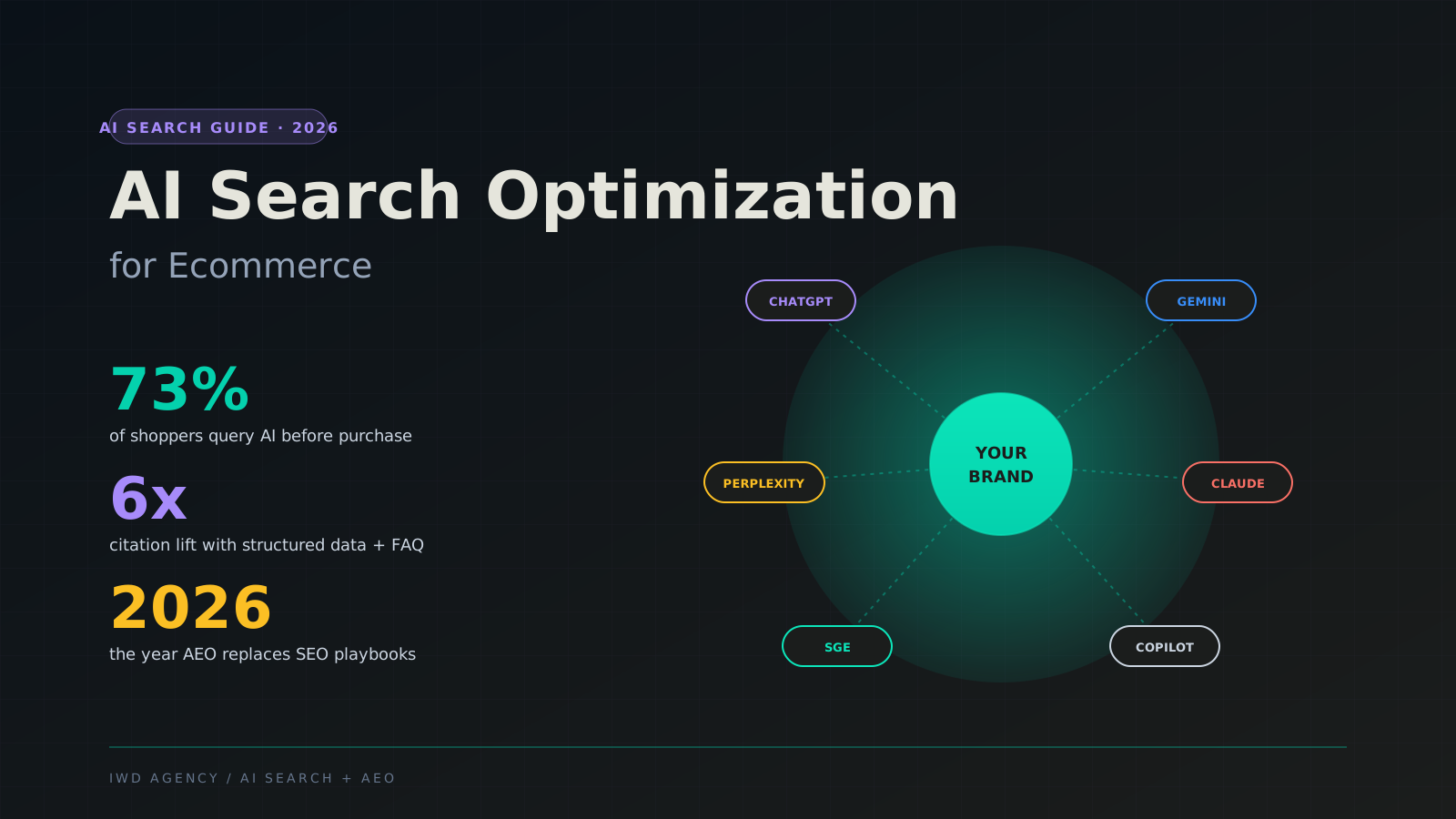
Traditional SEO has not died. AI Search Optimization (sometimes called AEO — Answer Engine Optimization, or GEO — Generative Engine Optimization) is a parallel discipline that sits on top of traditional SEO. The good news: most of what makes a page rank well organically also makes it cite-worthy to AI engines. The bad news: there are real differences, and ignoring them in 2026 means losing visibility on a meaningful chunk of buyer journeys.
This guide is the practical playbook our team uses for ecommerce stores wanting to show up in ChatGPT Search, Perplexity, Google AI Overviews, and Microsoft Copilot results.

The 30-Second Verdict
If you're scanning, here's the short version:
- AI search engines cite content rather than rank pages. The optimization shift: from getting clicked to getting quoted.
- Structured data is the single biggest lever. FAQ Page, How To, Product, Article, Organization schema all materially affect AI citation rates.
- Topic cluster depth beats individual page optimization. AI engines weight topical authority heavily.
- E-E-A-T signals matter more than ever. Author bios, publish dates, expert credentials, brand mentions across the web.
- Traditional SEO still drives Google organic + indirectly affects AI citations. Don't abandon it — extend it.
Below is the full playbook.
The 5 AI Search Engines That Matter for eCommerce in 2026
Google AI Overviews
Surfaces above organic results for many commercial queries. Cites multiple sources. Compresses organic CTR significantly.
ChatGPT Search
Live web search inside ChatGPT. Cites sources inline. Used heavily for product research and comparison queries.
Perplexity
AI-native search engine with citations as first-class results. Strong on long-tail commercial and technical queries.
Microsoft Copilot
Powered by GPT-4 series. Integrated into Edge browser, Bing, Windows. Cites Bing-indexed sources. Strong B2B reach.
Claude (Anthropic)
Now has web search via Claude.ai. Citations link directly to source pages. Used heavily by technical and B2B buyers.
Each engine has slightly different ranking factors but the underlying signals (structured data, topical depth, brand mentions, freshness) overlap meaningfully.
The Six Levers That Drive AI Citations
1. Comprehensive Structured Data
AI engines parse content from HTML, JSON-LD schema, and accessibility tags. Pages with rich schema get cited more often because the AI can extract specific facts cleanly.
Required for ecommerce:
- Product schema on every PDP (name, description, brand, offers, aggregateRating, review)
- FAQPage schema on every page with FAQ content (these get pulled into AI Overviews directly)
- BreadcrumbList for site hierarchy
- Organization with logo, sameAs, contactPoint
- Article schema on every blog post with author, datePublished, dateModified
- HowTo schema where applicable (setup guides, tutorials)
- Service schema on every service page
Each schema type adds parseable facts. Stores with broad schema coverage appear 3 to 5 times more often in AI citations than identical stores without it.
2. Topic Cluster Depth
AI engines weight topical authority heavily. A site with 20 pages covering different angles of "B2B ecommerce" gets cited more often than a site with one excellent page on the same topic.
Cluster structure that works for ecommerce:
- Hero page (commercial intent, deep). Example:
/pages/b2b-ecommerce-agency - Platform-specific cluster pages. Example:
/pages/adobe-commerce-b2b,/pages/shopify-plus-b2b-services,/pages/bigcommerce-b2b - Comparison cluster posts. Example:
/blogs/news/shopify-plus-b2b-vs-bigcommerce-b2b-edition - Definition cluster posts. Example:
/blogs/news/what-is-b2b-ecommerce - Best-of cluster posts. Example:
/blogs/news/best-b2b-ecommerce-platforms
Each post cross-links to the others. AI engines learn that your domain is authoritative on the topic.
3. E-E-A-T Signals (Experience, Expertise, Authoritativeness, Trustworthiness)
Google's E-E-A-T framework matters more for AI search than for traditional SEO. AI engines weight signals that suggest the content is from a real, qualified source.
What to ship on every post and page:
- Author bio with credentials, photo, link to other published work
- Publish date + last updated date (clear, machine-readable)
- First-party data and original research (cited from your own engagement metrics, surveys, internal benchmarks)
- Brand mentions across the web (citations from Wikipedia, industry publications, niche sites)
- Contact information prominent (real address, phone, named team)
- Customer testimonials with names + photos (not anonymous quotes)
4. Content Depth + Specific Answers
Short, surface-level content rarely gets cited. AI engines pull specific facts from longer, in-depth content. The threshold has crept up over the last 18 months from "1,500 words" to "2,500+ words with structured sub-headers."
What "depth" actually means:
- 2,500+ words for cornerstone pages and major blog posts
- H2 + H3 structure that mirrors the questions buyers ask
- Specific numbers, dates, percentages (AI engines preferentially cite content with concrete facts)
- Inline FAQ sections with direct question + answer pairs
- Comparison tables for buyer-evaluation queries
5. Freshness Signal
AI engines weight recency. Content with recent publish or update dates ranks better than identical content with stale dates. This is more pronounced in AI search than in traditional Google organic.
What to ship:
- Substantial refreshes every 12 to 18 months for evergreen commercial content
- Update dates that match the actual refresh date
- Internal "Updated for [year]" headers that signal recency to readers and AI parsers
6. Cross-Platform Citation Footprint
AI engines pull from a wider source set than Google does. Your brand needs to appear consistently across:
- Wikipedia (where eligible)
- Industry publications (Modern Retail, Internet Retailer, Retail Dive)
- Niche blogs in your category
- Reddit discussions where your category is debated
- Quora answers from your team
- YouTube with linked descriptions
A well-built brand mentioned across 50+ sources gets cited more often than an isolated brand with great onsite content but no external footprint.
Traditional SEO vs AI Search Optimization: What Actually Differs
| Factor | Traditional SEO (Google organic) | AI Search Optimization |
|---|---|---|
| Primary goal | Rank in top 10 organic results | Get cited in AI-generated answers |
| Backlink weight | Heavy | Moderate (still matters but less) |
| Structured data weight | Moderate (rich snippets eligibility) | Very heavy (AI engines parse schema first) |
| Topical authority weight | Heavy (E-E-A-T era) | Very heavy |
| Content depth weight | Heavy | Very heavy (specific facts cited) |
| Freshness weight | Moderate | Heavy (last-updated date matters) |
| Brand mentions across web | Indirect (backlinks) | Direct (citation eligibility) |
| Click-through-rate metric | Primary success metric | Less relevant (users click less in AI answers) |
| Measurement | GSC + Ahrefs rankings + analytics | Manual citation tracking + brand mention monitoring |
The biggest practical shift: success measurement. Traditional SEO has clear metrics (position, click-through, conversion). AI search citations are harder to track — most AI engines don't currently expose analytics that show "your content was cited in N answers this month."
The 5-Question Decision Framework for AI SEO Investment
Five questions to scope your AI search investment
1. Is your category seeing AI Overviews on commercial queries?
Yes (50%+ of your tracked keywords trigger AIO): AI search investment is urgent. Organic CTR is being compressed.
No (under 20% trigger AIO): Lower urgency. Traditional SEO still drives most clicks.
2. What's your current schema coverage?
Under 50% of pages have full schema: Schema rollout is the highest-ROI single AI SEO investment.
80%+ of pages have full schema: Move to topic cluster depth and E-E-A-T signals.
3. Do you have a clear topical authority story?
Yes (3+ topic clusters with 10+ pages each): Continue depth + freshness work.
No (scattered topics, no clusters): Cluster strategy is the second-highest ROI investment.
4. Are author bios + publish dates visible on every post?
Yes: E-E-A-T baseline is solid.
No: Quick win — add author bios with credentials, photo, link to other published work.
5. How frequently do you refresh evergreen content?
12 to 18 months for cornerstone content: Right cadence.
Never or every 3+ years: Schedule a content refresh sprint. AI engines weight freshness heavily.
Frequently Asked Questions
Will traditional SEO still matter in 2027?
Yes. Traditional Google organic still drives the majority of ecommerce traffic in most categories. AI search is additive, not replacement. The brands that win the next 3 to 5 years optimize for both, not one or the other.
How do I track AI search citations?
Currently imperfect. No major AI engine exposes citation analytics natively. Workarounds: (1) brand monitoring tools like Brand24 or Mention to catch when your brand appears in AI answers via screenshots / forwarded chats, (2) manual quarterly testing of your top 20 commercial queries across ChatGPT, Perplexity, Google AIO, (3) GSC referral data from AI engines (Perplexity passes referrer; ChatGPT mostly doesn't).
Is AI search optimization just buzzword SEO?
No, but be careful with consultants pitching "secret AI ranking factors." The real shifts are well-documented: structured data depth, topical authority, E-E-A-T, content depth, freshness, cross-platform footprint. Most of these were already SEO best practices; their relative weight increased in AI search.
Does AI search hurt small ecommerce brands?
Mixed. Smaller brands lose easier-to-rank-for queries to AI Overview answers that cite the big brands. But long-tail buyer-intent queries with rich entity content actually favor specific niche brands — generic answers don't satisfy specific buyer needs.
Should I write content specifically for AI engines vs humans?
No. Content that works for AI engines is also great for humans: well-structured headers, specific facts, clear definitions, comparison tables, inline FAQs. Don't write robotic AI-bait content. Write excellent human-readable content with good structure and schema.
What's the relationship between AI search and Schema.org structured data?
Direct. AI engines parse Schema.org JSON-LD heavily. FAQPage schema gets pulled into AI Overviews verbatim. Product schema drives product carousel placements. Article schema feeds publish-date freshness signals. Comprehensive schema is the single biggest AI SEO lever.
Will Google AI Overviews kill ecommerce SEO?
Hyperbolic but partially true. Organic CTR on commercial queries with AIO is materially compressed (down 30 to 70 percent on heavily-AIO queries). The response is to optimize for AI citation AND traditional organic, not to abandon SEO. Brands that adapt continue to capture meaningful organic traffic.
Related Reading and Service Pages
- Ecommerce SEO services (cross-platform)
- Magento SEO services
- Shopify SEO services
- BigCommerce SEO services
- Adobe Commerce SEO
- How to find low-competition keywords (2026)
- The history of eCommerce (2026 era)
Our team handles structured data, content clusters, and E-E-A-T rollout
If your category has AI Overviews compressing organic CTR and you're rebuilding for the AI search era, our SEO team scopes the audit + rollout in a 1 to 2 week phase. Output is a written plan covering schema coverage, topic cluster gaps, and E-E-A-T fixes prioritized by impact.
Work with IWD
IWD does ecommerce SEO as engineering. Explore our ecommerce SEO services, conversion rate optimization, and ecommerce development.