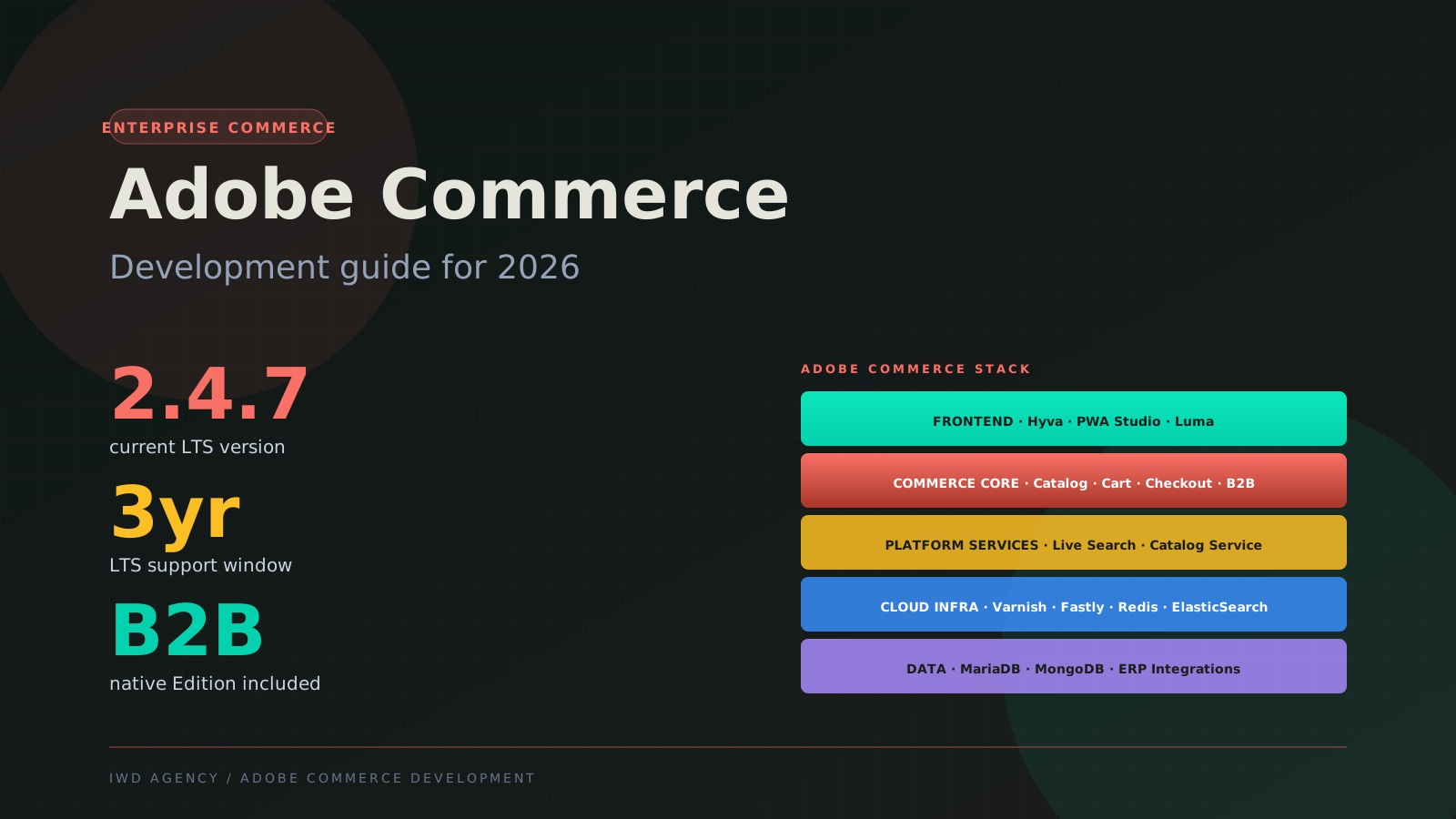
Adobe Commerce remains the most powerful open-architecture commerce platform on the market in 2026. It's also the most misunderstood. The Magento Open Source confusion, the Hyva vs Luma frontend debate, the B2B Edition feature set, and the Adobe Commerce Cloud vs on-prem hosting decision all collide in scoping conversations. This guide reflects how our Adobe Commerce agency team scopes and ships real builds.
This guide is what our team uses to clear those questions. It covers what Adobe Commerce actually is in 2026, where it wins against Shopify Plus and BigCommerce, the performance optimization patterns we ship on every build, and the decision framework we use to recommend Adobe Commerce versus other platforms.
The 30-Second Verdict
If you're scanning:
- Adobe Commerce wins for enterprise B2B, brands above 20M GMV with complex catalog and pricing requirements, regulated industries, and teams with the internal engineering resources to operate the platform.
- Shopify Plus wins for smaller B2B and unified B2B + DTC, brands below 20M GMV, lean ops teams, and faster time-to-launch over deep customization.
- The Hyva question matters. If you're on Adobe Commerce and not on Hyva yet, the frontend migration is the single fastest performance win available. 30 to 50 percent LCP improvement, 90+ Lighthouse mobile scores, no headless rebuild required.
- Adobe Commerce Cloud vs on-prem is no longer the obvious cloud-wins question. Self-managed AWS with a competent DevOps partner often beats Adobe Commerce Cloud on price and flexibility for mature teams.
Adobe Commerce vs Magento Open Source: Clearing the Confusion
The naming has changed multiple times since Adobe acquired Magento in 2018. Here's where things stand in 2026.
Magento Open Source is the same code base as Adobe Commerce minus the enterprise-only features (B2B Edition, Page Builder, Live Search, Catalog Service, Customer Segments, content staging). It's free to use but you handle hosting, patches, and operations yourself. Right for small to mid stores with internal engineering resources.
Adobe Commerce (sometimes still called Magento Commerce in legacy docs) adds the enterprise feature set on top of Open Source. License runs roughly 22K to 125K annually based on revenue and order volume tier. You still host it yourself or with a hosting partner.
Adobe Commerce Cloud is Adobe Commerce plus managed infrastructure. Adobe (via the Magento Cloud, which runs on AWS) handles the hosting, Fastly CDN, Git-based deploy pipeline, multi-environment promotion model, auto-scaling, and security scanning. License plus infrastructure runs roughly 40K to 200K annually.
The Hyva Question
If you're on Adobe Commerce in 2026 and not on Hyva yet, this is the most important conversation in your roadmap. Hyva is a Tailwind + Alpine.js storefront theme that ships with sub-2-second LCP on standard PDPs without the headless rebuild.
Luma is the default Magento and Adobe Commerce theme. It uses RequireJS, Knockout.js, and jQuery, an architecture pattern from 2013. The JavaScript bundle weight (~1.2MB) is the single biggest performance bottleneck on stock Magento builds. Lighthouse mobile scores of 28 to 45 are typical. Migrate off it.
Hyva strips out the entire Luma frontend stack and replaces it with Tailwind CSS plus Alpine.js. ~70KB JavaScript bundle. Sub-second LCP on standard PDPs. Lighthouse mobile scores of 90+ on properly-tuned implementations. Module compatibility is the trade-off: most third-party Magento modules need a Hyva compatibility module (most popular ones already have them), and custom theme code from your old Luma build needs to be rebuilt.
PWA Studio or custom headless (Next.js, Remix) is the third option. Higher cost (90K to 200K typical) but unlocks brand-bespoke front-ends with React-flexibility, and lets the frontend live independently of Magento upgrades. Right for brands above 50M GMV with brand-design priorities that exceed what Hyva's theme model supports.
For most teams in 2026, Hyva is the right answer. Faster than Luma, cheaper than headless, ships in 8 to 14 weeks against the 16 to 24 weeks of a full headless rebuild.
B2B Edition: What It Actually Ships
Adobe Commerce B2B Edition is the platform feature set that justifies enterprise pricing for B2B brands. It's frequently underestimated in scoping conversations because the feature list looks like a checkbox until you actually try to replicate it on a non-B2B platform.
The reason this matters: replicating Adobe Commerce B2B feature parity on Shopify Plus typically requires 6 to 12 third-party apps plus custom development. The TCO comparison narrows fast once you account for app subscriptions and custom dev cost. For brands at 20M+ GMV with real B2B complexity, Adobe Commerce often wins on total cost despite the higher license fee.
Performance Optimization: The Standard Stack
Adobe Commerce performance, configured properly, is excellent. Configured poorly (the default state on many builds), it's a disaster. The standard performance stack we ship on every Adobe Commerce engagement looks like this:
Edge CDN. Fastly comes standard with Adobe Commerce Cloud. Self-managed Adobe Commerce typically uses CloudFront or Cloudflare. Target 95%+ cache hit rate on static assets. Tuning involves vary-header correctness and ensuring versioned asset URLs.
Full Page Cache. Varnish in front of Magento serves cacheable HTML directly without hitting PHP. Target 80%+ FPC hit rate. ESI (Edge Side Includes) handles personalized blocks (cart count, customer greeting) inside otherwise-cacheable pages.
Application Cache. Redis for config, layout, blocks, full-page cache backend, and session storage. The single biggest performance win on Magento is moving sessions out of MySQL and into Redis.
Search. ElasticSearch is required on Magento 2.4+. Live Search (an Adobe Commerce service) is the higher-tier search engine with merchandiser rules and AI-driven relevance. Target sub-200ms search response time.
Database. MariaDB (or MySQL) with read replicas for high-volume reads, primary for writes. Tune query cache, connection pool, and slow query log. Target sub-50ms database query time on uncached page builds.
Adobe Commerce Cloud vs Self-Managed: The Hosting Decision
The traditional view that Adobe Commerce Cloud always wins for managed-infrastructure simplicity has shifted. Self-managed deployments on AWS or Azure with a competent DevOps partner can beat Adobe Commerce Cloud on price and flexibility, especially for mature teams.
| Dimension | Adobe Commerce Cloud | Self-managed on AWS |
|---|---|---|
| Infrastructure cost | Bundled in license (~40K to 200K) | Direct AWS bill (~24K to 96K) |
| Hosting operations | Adobe manages | You manage (or DevOps partner) |
| Deploy pipeline | Git-based, baked in | You build (CI/CD) |
| Environment promotion | Int → Stage → Prod, baked in | You build |
| Auto-scaling | Baked in, predictable | You configure (more flexible) |
| Custom infrastructure | Limited (Adobe-defined stack) | Anything AWS supports |
| SLA | Adobe-backed (99.9%) | Your responsibility |
| Right fit | Lean DevOps, need vendor SLA | Mature DevOps, want flexibility |
Adobe Commerce Cloud wins when your team is lean on DevOps and you want vendor-backed SLA for infrastructure availability. The bundled Git-based deploy pipeline, environment promotion, and Fastly CDN are real time-savings.
Self-managed on AWS wins when you have an in-house DevOps team or DevOps partner and want flexibility (custom Redis configurations, custom search infrastructure, custom monitoring stack). The cost savings can be 30 to 50 percent at scale, but you take on the operational responsibility.
When Adobe Commerce Wins, and When It Doesn't
Decision framework: when to pick Adobe Commerce
Enterprise B2B with company accounts, buyer hierarchy, and quote workflows
Adobe Commerce, almost always. Native B2B Edition covers what otherwise takes 6+ apps plus custom dev on Shopify Plus. Total cost-of-ownership analysis usually favors AC at this complexity level.
Mid-market B2C with complex catalog (10K+ SKUs, variant complexity)
Adobe Commerce or Shopify Plus. AC if you need deep catalog customization (custom attributes, complex hierarchical categories). Shopify Plus if your catalog is large but structurally standard.
Mid-market unified B2B + B2C under 20M GMV
Shopify Plus is usually the better fit. Unified storefront simpler, faster time-to-launch, lower ongoing ops cost. Switch to AC if B2B complexity exceeds Shopify Plus B2B's feature ceiling.
Small to mid B2C under 5M GMV
Shopify or BigCommerce, not Adobe Commerce. AC's operational complexity isn't justified at this scale. License cost alone makes it the wrong economic choice.
Regulated industries (FDA, ITAR, controlled substances)
Adobe Commerce or custom-built. AC's flexibility in custom workflows, audit trails, and serialization fits regulated businesses better than packaged SaaS platforms.
High-velocity flash sale or drop-based brands
Shopify Plus, not Adobe Commerce. Shopify's checkout infrastructure handles flash sale spikes better than even well-tuned Magento. AC can do it but requires more dedicated infrastructure investment.
What This Costs in 2026
Magento Open Source builds: 50K to 150K initial build. Self-hosted, you manage hosting. Best fit for stores under 5M GMV with internal engineering.
Adobe Commerce builds (self-managed): 100K to 350K initial build. 22K to 125K annual license. Plus self-managed hosting (~24K to 96K AWS). Best fit for 20M+ GMV with internal DevOps.
Adobe Commerce Cloud builds: 100K to 350K initial build. 40K to 200K annual (license + managed infra). Best fit for 20M+ GMV with lean DevOps.
B2B Edition add-on: +30 to 50K in build cost typical for B2B-specific configuration, customer hierarchy setup, and quote workflow customization. License cost is already included in Adobe Commerce.
Hyva theme migration: 35K to 95K depending on store complexity, number of custom theme features, and third-party module count.
Frequently Asked Questions
Common questions about Adobe Commerce development
Is Adobe Commerce the same as Magento?
Yes and no. Adobe Commerce is the commercial paid version. Magento Open Source is the free community version. Same code base with Adobe Commerce adding B2B Edition, Page Builder, Live Search, Catalog Service, customer segments, and content staging. The platform was renamed from Magento Commerce to Adobe Commerce in 2021.
Should we migrate from Luma to Hyva?
Almost always yes. Hyva is the most impactful single-investment performance improvement available to Adobe Commerce stores in 2026. 30-50% LCP reduction, 90+ Lighthouse mobile scores, sub-1-second page loads on standard PDPs. 8 to 14 week typical migration. See our Hyva vs Luma comparison for the full breakdown.
Do I need Adobe Commerce or can I use Magento Open Source?
Use Magento Open Source if: small to mid-market B2C, no B2B requirements, comfortable with self-hosting and community-supported patches, willing to forgo Page Builder and Live Search. Use Adobe Commerce if: B2B requirements exist, you need Page Builder for marketing teams, you want vendor-supplied security patches with enterprise SLA, you're above 10M GMV.
What does Adobe Commerce Cloud cost vs self-managed Adobe Commerce?
Adobe Commerce Cloud: 40K to 200K annual (license + managed infra bundled). Self-managed Adobe Commerce: 22K to 125K annual license, plus AWS infrastructure (24K to 96K typical), plus DevOps partner or in-house team. Self-managed is usually cheaper at scale but requires the DevOps capability to operate.
Can Adobe Commerce hit Lighthouse 90+ scores?
Yes, on Hyva. Luma-based stores typically score 28 to 45. Hyva-based stores routinely score 90+. PWA Studio and custom Next.js builds also achieve 85+. The platform isn't the bottleneck. The default Luma frontend is.
How does Adobe Commerce compare to Shopify Plus for B2B?
Adobe Commerce wins for complex B2B (multi-tier customer hierarchies, quote workflows with multi-step approval, contract pricing, deep ERP integration). Shopify Plus B2B wins for standard B2B (company accounts, basic Net 30, customer-group pricing) at lower TCO and faster time-to-launch. The line is roughly 20M GMV with serious B2B complexity.
How long does an Adobe Commerce build take?
Greenfield build: 16 to 28 weeks. Replatform from Shopify or BigCommerce: 20 to 32 weeks. Hyva theme migration on existing Adobe Commerce: 8 to 14 weeks. B2B Edition configuration on top of an existing Adobe Commerce: 8 to 16 weeks.
Related Reading
Adobe Commerce development services · Magento development services · Hyva theme development · Magento B2B solutions · Hyva vs Luma comparison · Magento NetSuite integration guide
If you're scoping an Adobe Commerce build, replatform, or Hyva migration for 2026, book a 30-minute fit assessment with our Adobe Commerce team.
Work with IWD
Build it with an Adobe-certified team. Explore our Adobe Commerce development services, Adobe Commerce integrations, and Adobe Commerce maintenance.