Aerospace and defense ecommerce, built for parts that are specified, not browsed.
Nobody shops an aerospace catalog. They arrive with a Military Part Number, an NSN, or a drawing, and they need to know that the part is right, that it is certified, and when it will actually ship. We build storefronts for A&D manufacturers, distributors, and MRO suppliers where part numbers drive search, lead times come from your ERP, certifications travel with the order, and quotes are a first-class path to purchase. Sixteen years in ecommerce, with no junior bench and no handoffs.








When the part number is the product, a generic store cannot carry it.
A&D storefronts fail in ways a retail store never sees. A buyer pastes in a Military Part Number and gets no results. A quote request disappears into an inbox. A lead time says three to five business days on a part with a fourteen-week build. Certifications live in a filing cabinet while the storefront promises traceability. We are the team A&D suppliers call when the catalog has to respect part numbering, certification, ERP truth, and export control all at once. We shipped exactly that for DMC Tools, a veteran-owned manufacturer of aerospace, defense, and military application tooling, on Adobe Commerce B2B wired into Infor Syteline, in production since 2022.
Credentials & recognition.
 Adobe Solution Partner
 Shopify Plus Partner
 BigCommerce Elite Partner
 Salesforce Partner
 Klaviyo Partner







We're here to help you win, plain and simple.
Same senior team from kickoff to launch and beyond. We do not outsource, we do not disappear after go-live, and we do not hand you off.
Across every phase. Discovery, build, launch, and growth, the same senior team stays with you.
From part-number search to quote workflows and ERP-connected lead times.
Whatever the A&D storefront needs, the same senior developers handle it end to end. Every engagement is scoped to your catalog, your ERP, and your compliance obligations, not a fixed package.
Quote first, or buy now?
The defining question in an A&D build is how much of your revenue can move to self-service checkout and how much has to stay in a quote. Most suppliers need both paths, and the storefront has to run them side by side without pushing a buyer down the wrong one. We build for either model, and for the mix in between, then help you decide which parts belong on which path.
Quote-first fits parts that are built to spec, export-controlled, priced against a contract, or subject to a lead time nobody can promise from a static field. The buyer assembles a request from the catalog, your order desk prices it with a real ship date, and the accepted quote converts into an order that lands clean in the ERP. Nothing ships against an estimate your production schedule cannot honor, and your team keeps control of pricing on every line. It costs you speed, and it puts load on the order desk, so it works only when quote turnaround is genuinely fast. But for long-lead assemblies, contract-priced government work, and anything requiring an approved-supplier check before it can be sold, it is the only honest path.
- Parts are built to spec or carry long lead times
- Pricing is contract-based or negotiated per account
- Buyers or destinations need vetting before sale
Self-service fits catalog parts, consumables, tooling, and the repeat MRO items your accounts reorder without a conversation. Logged-in accounts see their contract pricing and net terms, availability and promised ship dates come live from the ERP, and reorder from history turns a five-email exchange into two clicks. It takes volume off the order desk and captures the small routine orders that never justified a quote, and it is what lets a supplier grow revenue without growing headcount. It asks more of your data, because a wrong lead time or a stale price is now visible to the customer instantly, which is exactly why the ERP integration has to be real rather than a nightly file drop.
- Parts are catalog items, consumables, or tooling
- Accounts reorder the same items on repeat
- Your ERP can supply live pricing and ship dates
Selling to accounts, primes, and distributors? Start with B2B ecommerce.
Every integration here is running in a live store, with a case study behind it.
A&D suppliers run on ERPs, and the storefront is only as accurate as the integration behind it. These are the systems we have wired into live manufacturer and distributor storefronts, each cell linked to the build it came from.
 ERPNetSuiteTwo-way sync through the connector we build and maintain in-house
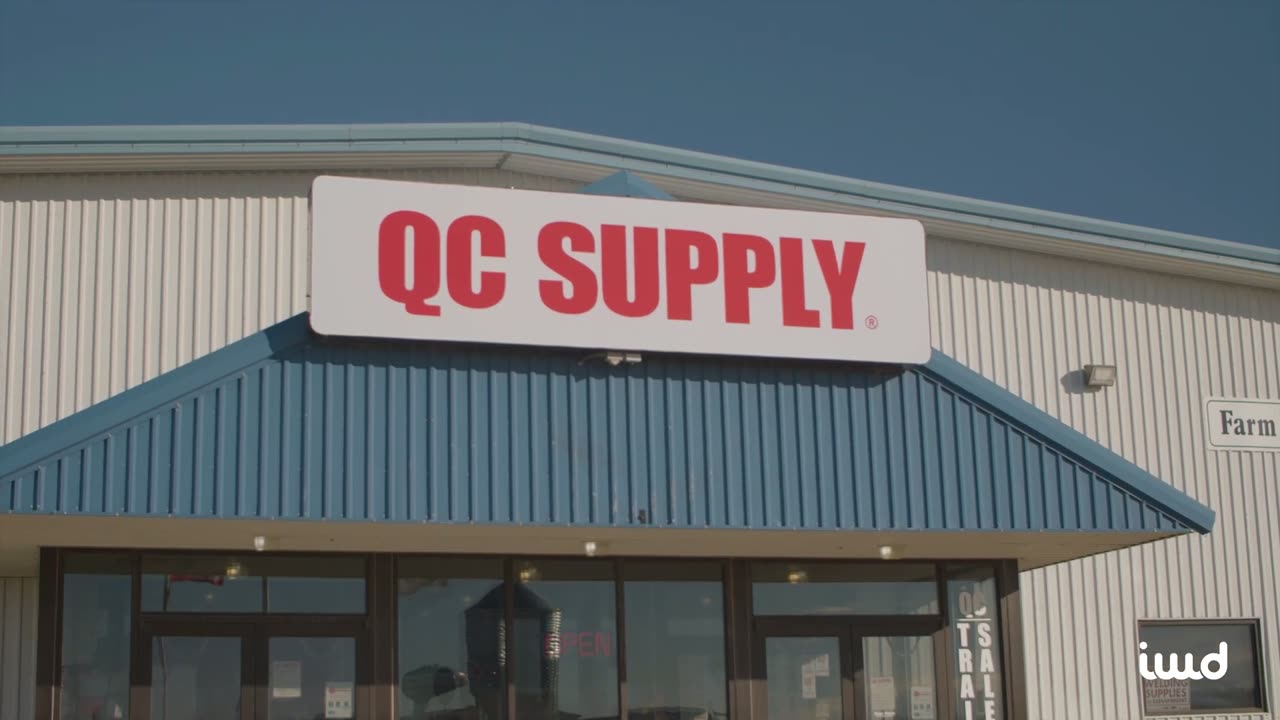
 ERPMicrosoft DynamicsMore than ten contract pricing tiers, headless, at QC Supply
 OperationsReal-time EDIEvery order pushed to the back-office ERP the moment it lands, at ADTRAN
 ERPInfor SytelineCustom document profiles and due-date writeback, at DMC
 ERPSageWholesale orders and the back office in lockstep, at Warner Press
 MiddlewareGreytrixThe Sage-to-Magento bridge behind Warner Press
 MiddlewareDCKAPCatalog and order sync for Adobe Commerce B2B, at SchoolFix
 TaxAvalaraAutomated tax across jurisdictions, at SchoolFix
 PaymentsPayFabricIntegrated payment capture against Sage, at Warner Press
Proof behind the partnership, not just a pitch.
A few of the stores our senior team has shipped, scaled, and stayed on to grow.

DMC
An Adobe Commerce storefront with deep catalog and inventory integration for a B2B distributor.
QC Supply
An enterprise Magento B2B rebuild with GroupBy search and Microsoft Dynamics ERP for a high-SKU distributor.

BinMaster
An Adobe Commerce rebuild for a global level-measurement manufacturer, with a modernized storefront and integrations.
The same senior developers from kickoff to launch and beyond.
Most A&D ecommerce projects go sideways for one of two reasons: the work gets passed to a junior team that has never modeled a part-number catalog or touched an ERP, or the agency disappears once the invoice clears. We built IWD to do the opposite.
We have shipped in aerospace and defense
DMC Tools, a veteran-owned manufacturer of aerospace, defense, and military application tooling, has run its Adobe Commerce B2B storefront on our build since 2022, wired directly into Infor Syteline.
We build for how parts are specified
Military Part Number and NSN as first-class fields, not custom attributes buried at the bottom of a PDP. Buyers who arrive with a part number get an exact match on the first query.
Sixteen years in ecommerce
Shipping on every major commerce platform since 2008, including high-SKU manufacturers and distributors whose catalogs carry certification and traceability requirements.
We build, then we stay
Most clients keep us on after launch for integrations, configurators, and growth work. The senior team that built your storefront is the team that keeps it running.
A clear path from audit to measurable results.
Audit
We review your catalog, part numbering, certification requirements, ERP, and export obligations to map what blocks buyers and which platform fits an A&D supplier.
Architect
A phased roadmap with scope, timeline, and a real number. You see the part-number data model, the quote flow, and the platform choice before any code is written.
Build
Two-week sprints, weekly demos, and a shared backlog. The same senior developers build the catalog, the RFQ workflow, the account logic, and the ERP integration.
Optimize
After launch we tune part search, quote conversion, and reorder flows, then extend the roadmap. We stay on to make the numbers move.
What A&D suppliers ask before they start a build.
The questions we hear most before an aerospace or defense build starts. If yours isn't here, just ask.
Can buyers search by Military Part Number, NSN, or CAGE code?
Yes, and for an A&D catalog that is the whole game. Buyers arrive with a part number rather than a product name, so we make Military Part Number and NSN first-class fields on every product page and index them for exact-match search, alongside your internal SKU and any customer-specific numbering. On the Adobe Commerce B2B storefront we built for DMC Tools, a manufacturer of aerospace, defense, and military application tooling, MPN and NSN sit on every PDP and drive search directly, so a buyer who pastes in a part number lands on the right part instead of an empty result.
How do you handle lead times for parts that are not sitting on a shelf?
A generic "ships in 3 to 5 business days" estimate is worse than no estimate at all in this industry. We pull promised ship dates from your ERP and show them per part on the product page, so the date a buyer sees is the date your production system is actually committing to. For DMC we drive live lead times straight from Infor Syteline, and every spec on the page reflects the ERP within about a minute of a change, which means nobody re-keys part data into the storefront.
Can the store handle certificates of conformance, material certs, and lot traceability?
Yes. We attach certification and documentation records to the part and to the order, so a buyer can pull a certificate of conformance, material cert, spec sheet, drawing, or CAD file from the product page, and your team can trace what shipped against a lot or batch after the fact. Where those records live in your ERP or QMS, we surface them through the integration rather than asking anyone to maintain a second copy on the storefront.
Most of our orders start as a quote, not a checkout. Can you build that?
Yes, and it is usually the core of the build. We put RFQ and quote-to-order at the center of the buying path rather than treating it as a contact form: a buyer builds a request from the catalog, your team prices and returns it with lead times, and the accepted quote converts into an order that lands clean in your ERP. We pair it with net terms, purchase orders, and approval chains, including the request-credit-terms workflow we built into DMC's checkout so new accounts can apply for terms without leaving the store.
Can you restrict who sees export-controlled parts?
Yes, on the storefront side. We build the mechanics: catalog and category visibility gated by customer group, account vetting and approval before a buyer can see or order restricted items, per-account catalog scoping, and blocked destinations at checkout. To be clear about the boundary, we build and enforce the rules your compliance team defines. We are an ecommerce engineering team, not an ITAR or EAR compliance advisor, so your trade-compliance counsel sets the classifications and we make the storefront honor them.
Can we serve authorized distributors and direct buyers from one platform?
Yes. Primes, government buyers, MRO shops, and your authorized distributor network can all run off one catalog with separate pricing, visibility, and permissions. Public visitors see published information, logged-in accounts see their negotiated terms and their approved part list, and a distributor portal lets partners check stock, place wholesale orders, and reorder on their own terms without competing with your direct pricing.
Which platform is best for an aerospace and defense storefront?
It depends on catalog depth, how much of your buying runs through quotes and accounts, your certification requirements, and the ERP you run. We are platform-agnostic and build on Adobe Commerce and Magento, Shopify and Shopify Plus, and BigCommerce. For A&D suppliers the deciding factor is usually the depth of the B2B account model and how hard the ERP integration has to work, which is why DMC runs on Adobe Commerce B2B. We recommend what fits your catalog and roadmap rather than what we happen to sell.
Build the storefront your part numbers deserve.
Tell us how your buyers specify parts, what your certification requirements look like, and which ERP you run. We will come back within one business day with a real plan, the right platform, a real timeline, and a real number.
Start a project