

 Partner

B2B ecommerce for distributors whose prices, stock, and accounts live in the ERP.
Ecommerce for distributors has to show each account its own contract price, sell in the units your warehouse ships, promise only the stock a branch actually has, and post every order back to the ERP without rekeying. IWD builds B2B ecommerce for distributors on Adobe Commerce, Magento, Shopify Plus, and BigCommerce: contractor and trade accounts, quick order, net terms, and the ERP and supplier feeds that distributor ecommerce depends on.
You’ll know every name on your distributor ecommerce team.
- 175+ years of combined ecommerce experience.
- Senior developers & designers, dedicated PM & CXM.
- Over a decade together for most of us. Average tenure is nine years.
- 15 people. Lean mean machine.
 Joe M.Founder & CEO
 Max D.CTO
 Marcos A.Senior Project Manager
 Yaro P.Lead Full-Stack Developer
 Bohdan B.Senior Frontend Developer
B2B distributor ecommerce has to carry rules a consumer store never sees.
Distributors call us when the website stops matching the business. The catalog runs deep and sells in several units of measure, every account has its own price, stock sits in more than one warehouse, and the best customers still phone in orders because the site cannot do what a rep does. If you also make what you sell, our manufacturing ecommerce page covers the dealer and direct side, and you can browse the other industries we serve.
Every account sees list price
Contract prices, customer price levels, and quantity breaks live in the ERP, but the website shows one price to everyone, so accounts call their rep for the real number.
Stock is right for one branch and wrong for the rest
Inventory syncs from a single location or once a night, so the site promises items that sit in another warehouse or are already committed to another order.
Contractors reorder by phone and text
Trade buyers order the same items every week, often from a job site on a phone. Without saved lists and quick order, they call the counter instead.
Units of measure break the cart
You sell by the each, the box, the case, and the foot, and the ERP knows the conversions. The website does not, so orders arrive in the wrong quantity.
Large accounts ask for punchout
Procurement teams at your biggest customers want to buy from inside their own purchasing system. Without punchout, those orders stay on email and PDFs.
What a B2B ecommerce platform for distributors has to handle from day one.
These are the requirements we scope on almost every distribution project. The platform's native features cover some of them, and the rest is configuration, custom work, and integration.
Large catalogs and units of measure
Deep catalogs with the attributes buyers filter by, cross-references to manufacturer part numbers, and units of measure such as each, box, and case, with the ERP's conversions applied in the cart.
Customer-specific and contract pricing
Contract prices, price levels, and quantity breaks per account, pulled from the ERP. For a multi-branch trade supply distributor, we connected the store to Infor SX.e for customer-specific pricing across thousands of accounts.
Multi-warehouse inventory and split shipments
Stock by warehouse or branch, and orders split across origins with accurate freight. For QC Supply we built a line-item source split across warehouses synced from Dynamics NAV, with stitched per-shipment rates.
Quick order and reorder
Order by SKU or part number, paste a list, upload a CSV, and reorder from history or saved lists, fast enough for a buyer standing on a job site.
Contractor and trade accounts
Contractor portal ecommerce for trade accounts: company logins with several buyers, job site ship-to addresses, approval rules, and pricing that follows the account rather than the person.
Punchout requests
cXML and OCI punchout for large accounts that buy from inside their procurement system, scoped against the systems your customers actually use.
Net terms and credit limits
Pay on account with a PO number, with terms and credit limits from the ERP checked at checkout, and card payment kept for cash accounts.
ERP and supplier data feeds
Two-way ERP sync for accounts, pricing, stock, and orders, plus supplier feeds for item data and dropship. For Inyo Pools we are building live cost and inventory feeds from three national distributors alongside Sage 100.
Rep-assisted ordering
Inside and outside sales reps log in on behalf of an account and build carts and quotes at that account's pricing, so phone orders follow the same rules as web orders.
The logged-in account side (company buyers, roles, approvals, invoices, and statements) is what our B2B portal development team builds. Running NetSuite? See NetSuite integration services, or Dominate's NetSuite connector for a standard sync.
Distributor ecommerce services, from the account portal to the warehouse feed.
The same senior team handles each piece end to end. Every engagement is scoped to your catalog, your accounts, and your ERP, not a fixed package. The connection to the back office runs through our ERP integration services.
Distributor ecommerce work from a team with the reviews to back it.
 Adobe Solution Partner
 Shopify Plus Partner
 BigCommerce Elite Partner
 Salesforce Partner
 Klaviyo Partner







Choosing a distributor B2B ecommerce platform by catalog, pricing, and the ERP behind it.
No platform is right for every distributor. The choice depends on catalog size, how specific your pricing rules are, how many warehouses and companies you run, and which ERP holds the data. We build on all four.
Adobe Commerce for distributors
Adobe Commerce has the deepest native B2B feature set (company accounts, shared catalogs, negotiable quotes, requisition lists, quick order, and purchase order approvals) plus multi-source inventory for several warehouses. QC Supply's headless Adobe Commerce platform, which we built over Dynamics NAV, ran tiered B2B pricing and split orders across warehouses.
Magento for distributors
Magento Open Source gives you full control of the code without Adobe Commerce licensing. Customer groups, tier prices, and multi-source inventory are native, while company accounts, quotes, and approvals are built as custom modules or added with extensions. It suits distributors with unusual pricing logic and a team that wants to own the code.
Shopify Plus for distributors
Shopify Plus B2B adds company profiles with locations, catalogs with account pricing, payment terms, quantity rules, and volume pricing. It fits distributors with a moderate catalog and simpler price structures, or with a DTC store alongside the trade business. ERP-driven pricing and units of measure usually need a custom app.
BigCommerce for distributors
BigCommerce B2B Edition brings a buyer portal with company hierarchies, quick order, shopping lists, quotes, an invoice portal, and sales rep masquerade for rep-assisted orders. Price lists and Multi-Storefront let one catalog serve several brands or regions, with the ERP integration routing each order to the right company.
Selling wholesale and direct-to-consumer from the same catalog? Our wholesale ecommerce platform page covers running both from one stack.
Self-serve ordering, or orders your reps place for the account?
Distributors rarely choose only one. The real question is which orders belong online and which still need a person, and the platform has to support both without two sets of pricing and credit rules.
Repeat buyers log in, see their contract price and the stock at their branch, reorder from history or a saved list, and check out on terms. Orders reach the ERP complete, at any hour, without the counter or inside sales touching them, and your reps spend their time on new accounts and larger projects instead of typing in reorders.
- Accounts reorder the same items often
- Buyers order after hours or from job sites
- Your reps are buried in routine order entry
Reps log in as the account, build the cart or quote at that account's pricing, and send it for approval or submit it on the buyer's behalf. Phone and counter orders go through the same site, so pricing, order history, and credit checks match whichever channel the order came from.
- Orders need substitutions or project pricing
- Large accounts expect a named rep
- Some customers will always prefer the phone
Most distributors need both, so we build buyers and reps into one site with one set of pricing and credit rules. Building the full B2B store around it? See B2B ecommerce development.
B2B builds where the ERP and the warehouses drive the store.
The Shopify Plus B2B platform we are building for Europa Eyewear, a wholesale eyewear distributor, DMC's B2B store on Infor SyteLine, and the multi-warehouse B2B platform we built for QC Supply on Dynamics NAV.

Europa Eyewear
The Shopify Plus wholesale platform we are building, with SparkLayer B2B and a Mirakl marketplace, for a global eyewear house.

DMC
An Adobe Commerce storefront with deep catalog and inventory integration for an aerospace and defense tooling manufacturer.
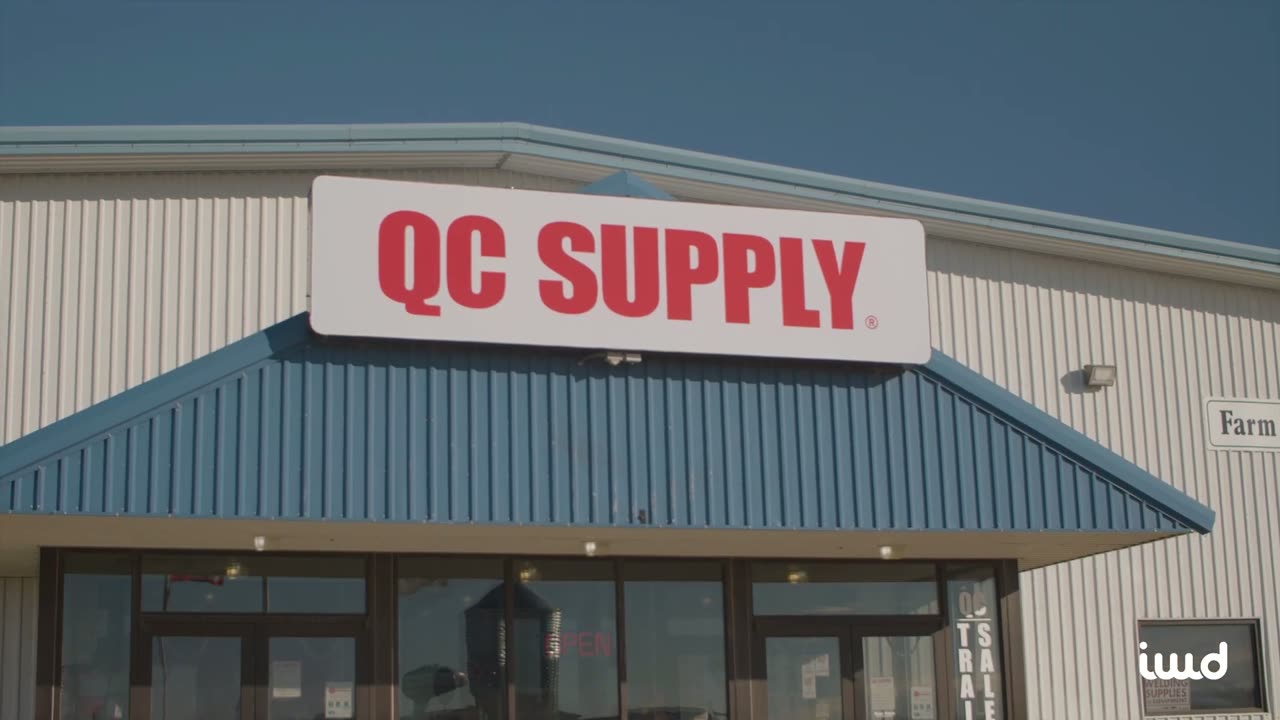
QC Supply
A headless Adobe Commerce B2B platform we built on Microsoft Dynamics NAV for a farm and ranch retailer with B2B Pro accounts.
A distributor ecommerce partner that stays after launch.
Same senior team from kickoff to launch and beyond. We do not outsource, we do not disappear after go-live, and we do not hand you off.
Across every phase. Discovery, build, launch, and growth, the same senior team stays with you.

Our job is to get you promoted.
You're going to love coming to work. Think of us as an extension of your team, here whenever you need us. Our mission is simple: your store wins, and so do you.
The same senior team builds the store, the portal, and the ERP connection.
Distributor ecommerce projects usually go wrong at the edges: prices the ERP and the website calculate differently, stock one warehouse reports and another does not, and orders that post as the wrong document type. IWD builds the storefront and the integrations behind it, so the same people own both sides of every rule. Connecting Dynamics, Sage, or Infor? See Microsoft Dynamics ecommerce integration, Sage 100 ecommerce integration, and Infor ecommerce integration.
Multi-warehouse and ERP proof
Infor SX.e contract pricing and branch inventory for a multi-branch trade supply distributor, and multi-warehouse inventory with tiered Pro pricing on Dynamics NAV for QC Supply, a farm and ranch retailer.
Supplier feeds as well as the ERP
We are building live cost and inventory feeds from three national distributors for Inyo Pools, so supplier data and dropship orders move without email.
Platform-agnostic advice
We build on Adobe Commerce, Magento, Shopify Plus, and BigCommerce, and recommend the one that fits your catalog, your accounts, and your ERP.
Honest scoping
If a connector or the platform's native B2B features cover you, we say so. Custom work is for the rules that genuinely need it.
A distributor build planned around your price files and your warehouses.
Pricing structures, units of measure, and warehouse rules differ at every distributor. We agree on them in writing before anything is configured.
Assess
A 30-minute call on your catalog, accounts, warehouses, ERP, and the platform you run or are considering. If an off-the-shelf option fits, we say so.
Map
We document which system owns items, units of measure, prices, stock, and accounts, and how orders, credits, and returns post back, with operations and finance.
Build and test
We configure the platform, build the custom pieces and the ERP and supplier integrations, and test with real accounts, price files, and multi-warehouse orders.
Launch and support
We go live, onboard accounts in groups, watch the first weeks of orders closely, and support the store as branches, suppliers, and price lists change.
What distributors ask before they start a build.
The questions we hear most before a distribution build starts. If yours isn't here, just ask.
What does B2B ecommerce for distributors need to include?
At minimum: account-specific and contract pricing, units of measure, inventory by warehouse, quick order and reorder, company accounts for contractors and trade buyers, net terms and PO payment, and a two-way ERP integration. Many distributors also need punchout for large accounts, supplier data feeds, split shipments, and tools for reps to order on an account's behalf.
What is the best B2B ecommerce platform for distributors?
It depends on catalog size, pricing complexity, warehouses, and the ERP. Adobe Commerce has the deepest native B2B features, Magento Open Source suits teams that want full control of custom code, BigCommerce B2B Edition ships a buyer portal with rep tools, and Shopify Plus B2B fits simpler price structures or a DTC store alongside. We build on all four and recommend from your requirements.
Can each customer see their own contract pricing online?
Yes. Contract prices, price levels, and quantity breaks can come straight from the ERP, so each account sees the price its rep would quote. For a multi-branch trade supply distributor we connected the store to Infor SX.e for customer-specific pricing across thousands of accounts. We choose scheduled sync or live lookups based on catalog size and how often prices change.
Can the store handle several warehouses and split shipments?
Yes. The store can show stock by warehouse or branch, choose the right source for each line, and split an order across origins with accurate freight. For QC Supply we synced multi-warehouse inventory from Dynamics NAV and built a line-item source split that stitched accurate per-shipment rates.
Can contractors and trade accounts reorder quickly from a phone?
Yes. Contractor and trade accounts get saved lists, reorder from history, and quick order by SKU or part number on a mobile-friendly site, with job site ship-to addresses and approval rules set on the company account.
Do you support punchout for large accounts?
Yes. When a large customer wants to buy from inside its procurement system, we scope cXML or OCI punchout on your platform, using an established punchout extension or service where one fits. We confirm which procurement systems your accounts use before recommending an approach.
Which ERPs do you connect for distributors?
We have connected Microsoft Dynamics NAV and Business Central, Infor SX.e and SyteLine, Sage Intacct, and NetSuite to ecommerce stores, and we are building two-way Sage 100 integrations now, including the Inyo Pools platform with live feeds from three national distributors. If your ERP is not on that list, we assess its API or file options on the first call.
Tell us how many accounts, warehouses, and price lists your store has to respect.
Send us your ERP, your current platform or the one you are considering, and how your best accounts order today. We will come back within one business day with an honest read on the right platform and the integration it needs.