The best ecommerce platform comparison.
IWD has spent 17 years developing and designing on every major ecommerce platform. We take the time to understand your needs, then run our proprietary platform comparison across Shopify Plus, Adobe Commerce (Magento), BigCommerce, WooCommerce, and Salesforce Commerce Cloud to give you an unbiased recommendation. Behind that recommendation: 300+ brands launched and $10B+ in client GMV.








One of the most important decisions you'll make.
The ecommerce platform you choose will be the foundation of your business growth for the next five years. It dictates your ecommerce budget, how you scale, how agile you can be, and how much bandwidth your team needs to invest. Most comparison content online is written by the platforms themselves or by agencies certified on exactly one of them. We are certified across all the major ecommerce platforms, and most of our replatforming work is fixing a choice that was made for the vendor's reasons instead of the merchant's. This is the comparison we wish those brands had read first.
You’ll know every name on your project.
- 175+ years of combined ecommerce experience.
- Senior developers & designers, dedicated PM & CXM.
- Over a decade together for most of us. Average tenure is nine years.
- 15 people. Bigger isn't always better.


Credentials & recognition.
 Adobe Solution Partner
 Shopify Plus Partner
 BigCommerce Elite Partner
 Salesforce Partner
 Klaviyo Partner







We're here to help you win, plain and simple.
Same senior team from kickoff to launch and beyond. We do not outsource, we do not disappear after go-live, and we do not hand you off.
Across every phase. Discovery, build, launch, and growth, the same senior team stays with you.
Shopify Plus, Adobe Commerce, or BigCommerce: the honest trade-offs.
These three cover the vast majority of mid-market and enterprise builds we scope. None of them is best. Each one wins for a specific kind of merchant, and picking against type is what makes builds run long and budgets run over.
 Shopify Plus Shopify Plus |  Adobe Commerce Adobe Commerce |  BigCommerce BigCommerce | |
|---|---|---|---|
| Model | Managed SaaS | Self-hosted or Adobe-managed cloud | Managed SaaS, open APIs |
| Launch speed | Fastest in commerce | Build-heavy, longest runway | Fast, lighter than Adobe |
| Customization | App-based, within Shopify's model | Deepest; you own the full stack | Open APIs, moderate depth |
| Native B2B | Add-on B2B and apps | Enterprise-grade, built in | Strong mid-market B2B, built in |
| Multi-store | Limited; extra stores cost extra | Many stores and price books from one backend | Multi-storefront supported |
| Headless | Hydrogen and Oxygen | PWA Studio, fully headless | Headless-native APIs |
| Operating overhead | Lowest; small team runs it | Highest; rewards real complexity | Low SaaS upkeep |
| Best for | DTC speed at scale with a catalog that fits the model | Complex catalogs and B2B that will not bend to SaaS | B2B and rich catalogs without enterprise licensing |
Leaning toward Adobe Commerce for a complex catalog or B2B? Our dedicated Adobe Commerce agency page covers that build in depth. Selling on WordPress or inside the Salesforce ecosystem? WooCommerce and Salesforce Commerce Cloud are covered below.
One agency across the ecommerce platforms that matter.
Certified teams on each platform, plus the selection and migration work that connects them. Whichever way the comparison lands, the build stays with the same senior people.
Proof behind the partnership, not just a pitch.
A few of the stores our senior team has shipped, scaled, and stayed on to grow.

Europa Eyewear
A Shopify Plus wholesale storefront with SparkLayer B2B and a Mirakl marketplace for a global eyewear house.
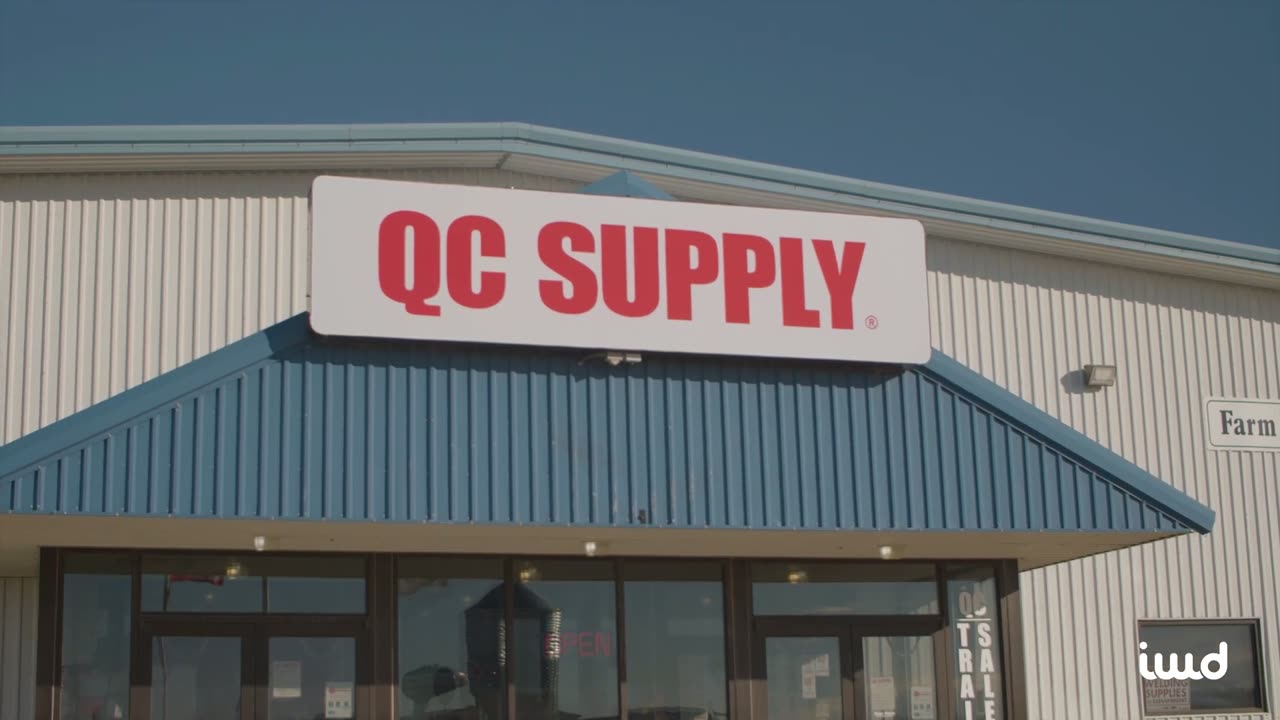
QC Supply
An enterprise Magento B2B rebuild with GroupBy search and Microsoft Dynamics ERP for a high-SKU distributor.

Penn State
A multi-store Adobe Commerce build for Penn State Extension, serving learners across 67 counties.
A platform comparison with no thumb on the scale.
Ask a Shopify agency which platform to pick and you already know the answer. We hold senior certifications across the major platforms, including Adobe-certified engineers, so the only thing we are selling is the right call.
No platform to defend
We are certified across Shopify Plus, Adobe Commerce, BigCommerce, and more. The recommendation is the platform that fits your store, because we win either way.
Senior team, no junior bench
The people scoring your requirements are the engineers and strategists who will build on the winner. Nothing is routed to an analyst.
Seventeen years of platform decisions
Since 2008 we have launched 300+ brands and powered $10B+ in client GMV across every major platform, in both directions of most migrations.
Total cost of ownership, not sticker price
License fees are the smallest part of the bill. We model build, apps, integrations, and upkeep for each candidate so the comparison is honest.
From your requirements to a platform you can defend.
Requirements
We map your catalog, order volume, B2B needs, integrations, and team before any platform name enters the conversation.
Shortlist
We score the realistic candidates against those requirements and rule out the platforms that would fight your business model.
Recommendation
A documented pick with total cost of ownership and the trade-offs in plain language, one you could hand to your board.
Build or migrate
The same senior team carries the decision into development or replatforming, so the reasoning survives into production.
What merchants ask when comparing ecommerce platforms.
The questions we hear most before a platform decision. If yours isn't here, just ask.
Which ecommerce platform is best?
There is no single best ecommerce platform, only the best fit for a specific catalog, team, and growth plan. Shopify Plus wins on speed to market and operating simplicity. Adobe Commerce (Magento) wins on deep customization and complex B2B. BigCommerce wins on open APIs with low operational overhead. We build on all of them, so our recommendation comes from your requirements rather than a platform we need to defend.
Shopify vs Magento: who is each one for?
Shopify suits brands that want a fast launch, a managed cloud platform, and a large app ecosystem, and whose requirements mostly fit how Shopify works out of the box. Magento, now Adobe Commerce, suits merchants with complex catalogs, custom pricing, multi-store setups, or B2B workflows that need to be built exactly to spec. The trade is flexibility versus operating overhead: Magento can do almost anything but expects you to own more of the stack.
How does BigCommerce compare to Shopify?
They are closer to each other than either is to Adobe Commerce. Both are managed SaaS platforms with fast launches and predictable upkeep. BigCommerce tends to include more B2B and catalog capability natively and offers open, flexible APIs, while Shopify has the larger app and partner ecosystem and a stronger checkout conversion track record. For most brands the decision comes down to which platform covers more of your requirements without apps or custom work.
When is Adobe Commerce worth it?
When your requirements are genuinely complex: large or layered catalogs, customer-specific pricing, quoting and net terms, multiple stores or brands from one backend, or deep ERP integration. Adobe Commerce is built for exactly that, and for those merchants it is often the cheaper path because you are not fighting a SaaS platform's constraints. If your requirements are standard DTC, a SaaS platform will get you live faster for less.
How much do ecommerce platforms cost?
The license models differ more than the sticker prices suggest. Shopify and BigCommerce are subscription SaaS: a monthly fee that scales with volume, with hosting and security included. Adobe Commerce is licensed on revenue tiers for the paid edition, and open source Magento has no license fee but you carry hosting, patching, and maintenance. WooCommerce is free software with the same self-hosted obligations. Total cost of ownership, including build, apps, integrations, and upkeep, matters far more than the platform fee, and we model it for your store before recommending anything.
How do you help us choose a platform?
We start with your business, not the software: catalog shape, order volume, B2B requirements, integrations, team, and growth plan. Then we score the realistic candidates against those requirements, model total cost of ownership for each, and document the trade-offs in plain language. Because we build on every major platform, the recommendation is the one we would stake the build on, and the same senior team can carry it through development and migration.
Get the platform answer from a team with nothing to sell you.
Tell us about your catalog, your volume, and how you sell. We will come back within one business day with the platform we would pick for your store and the reasoning behind it. No obligation, no vendor pitch.
Start a project