

 Partner

Infor ecommerce integration for manufacturers and distributors that run on SyteLine or SX.e.
Infor ecommerce works when your store reads the customers, terms, prices, stock, and lead times already in Infor, and every web order lands back in the ERP without anyone retyping it. IWD builds Infor CloudSuite ecommerce integrations for Magento, Adobe Commerce, Shopify, and BigCommerce B2B stores, including SyteLine (now CloudSuite Industrial) and SX.e (now CloudSuite Distribution), with the lead-time and payment rules a standard connector leaves out.
You’ll know every name on your project.
- 175+ years of combined ecommerce experience.
- Senior developers & designers, dedicated PM & CXM.
- Over a decade together for most of us. Average tenure is nine years.
- 15 people. Lean mean machine.
 Joe M.Founder & CEO
 Max D.CTO
 Marcos A.Senior Project Manager
 Yaro P.Lead Full-Stack Developer
 Bohdan B.Senior Frontend Developer
Infor CloudSuite ecommerce problems we are called in to fix.
Infor is usually where the real business rules live: customer accounts, payment terms, pricing, warehouses, and lead times. When the storefront does not read those rules, your order desk fills the gap by hand. These are the symptoms we hear most before an Infor integration project starts.
Web orders are rekeyed into Infor
Orders arrive by email or export and someone re-enters them in SyteLine or SX.e, so every rush order waits for a person and every typo reaches the shop floor or the warehouse.
Customer pricing stays inside the ERP
Contract pricing, customer-specific prices, and quantity breaks live in Infor, but the store shows list price, so trade buyers call their rep instead of ordering online.
Nobody can see when a part will ship
Lead times live in the ERP, so buyers call or email to ask for a ship date, and the order desk spends its day answering instead of processing orders.
Customer records do not match
The same customer exists under slightly different account numbers in the store and the ERP, so orders fail to match and someone fixes them one at a time.
Payment is out of step with fulfillment
Cards are charged at checkout even when an order ships in parts or weeks later, so finance handles adjustments and refunds by hand.
SyteLine, SX.e, or another CloudSuite product: the product decides how you connect.
Infor sells several ERPs, many now under the CloudSuite name, and most companies have customized theirs. We start every Infor ecommerce integration by confirming the product, the version, and whether it runs in Infor's cloud or on your own servers.
Infor SyteLine (CloudSuite Industrial)
SyteLine, now sold as Infor CloudSuite Industrial (CSI), is a manufacturing ERP that exposes its business data through IDOs (Intelligent Data Objects), which external systems can reach through the IDO REST API. That is the path we used for DMC, mapping customers, addresses, payment terms, items, inventory, lead times, orders, and shipments.
Infor SX.e (CloudSuite Distribution)
SX.e is an Infor ERP for distributors, offered in the cloud as Infor CloudSuite Distribution. Storefront integrations can run through Greywolf APIs, with middleware for order flow, which is how we connected a multi-branch distributor's Magento 2 B2B store.
Other Infor CloudSuite products
Infor M3, Infor LN, and other CloudSuite products expose data differently again, and cloud deployments may route integrations through Infor ION, Infor's integration platform. We confirm what your product and hosting allow on the first call, and say plainly whether we have done it before.
Two Infor integrations we have built, one for a manufacturer and one for a distributor.
Both projects connected a B2B store to Infor with pricing, customer, and order rules specific to the business. One is a public case study, and the other stays anonymous.
DMC: Infor SyteLine ecommerce integration on Adobe Commerce B2B
DMC, a manufacturer of aerospace and defense tooling, runs its B2B store on Adobe Commerce with a bidirectional Infor SyteLine sync through the IDO REST API: customers, addresses, payment terms, products, inventory, lead times, orders, and shipments.
Account numbers are normalized across the customer base, and a check API maps every customer account in the store to its canonical SyteLine ID. Cards are pre-authorized at checkout, and final capture fires from the ERP after shipment.
Product pages show part numbers, NSNs, tier pricing, and ERP-driven ship dates and lead times, all pulled from SyteLine.
A multi-branch trade supply distributor: Infor SX.e on Magento 2 B2B
For a multi-branch trade supply distributor, we connected a Magento 2 B2B store to Infor SX.e through Greywolf APIs. Approved registrations created customers in the ERP, and products and inventory by warehouse flowed into Magento.
Customer-specific pricing for thousands of accounts was imported daily into a custom pricing engine, so each buyer saw their own price.
Orders moved to the ERP through eBridge middleware, and ERP purchase history and requisition lists appeared in the customer account.
Infor ecommerce integration for four platforms, each with its own rules.
The same Infor setup behaves differently behind each storefront. Here is where the work sits on each platform, and where to read more about the platform side.
Magento Infor data integration
Magento Open Source gives you full control of the code, so Infor customers, prices, and stock can drive customer groups, a custom pricing engine, and checkout rules directly. Our SX.e distributor build ran on Magento 2 B2B, with an Infor ERP Magento sync for customers, products, inventory by warehouse, daily customer pricing, and orders. We queue the sync so reindexes and upgrades do not drop orders.
Adobe Commerce Infor SyteLine integration
Adobe Commerce B2B adds company accounts, quotes, and purchase order approvals, and each one has to land in SyteLine as the right customer, terms, and order. DMC's Adobe Commerce B2B store runs a bidirectional SyteLine sync, with ERP-driven ship dates on every product page and card capture from the ERP after shipment.
Shopify Infor integration
Shopify Plus B2B brings companies, catalogs, and payment terms that have to match Infor customers and pricing. We work within Shopify's API limits and build the custom app or middleware that carries Infor pricing, stock, and orders between the two systems.
BigCommerce Infor integration
BigCommerce B2B Edition customer groups, price lists, and quotes need to line up with Infor customers and pricing, and each storefront has to send orders to the right warehouse or site in the ERP. We design that routing and build the API work to keep both systems in agreement.
Running a different ERP in another part of the business? See our ERP integration services, or go straight to Magento SAP integration, Microsoft Dynamics ecommerce integration, Sage 100 ecommerce integration, Epicor ecommerce integration, Acumatica ecommerce integration, or NetSuite integration services.
The Infor records that decide whether a B2B order ships on time.
Every Infor project starts from the same list and then follows your setup. Each record gets an owner, a direction, a timing, and an error rule before anything is built.
Customers, ship-to addresses, and terms
Infor customers and ship-to addresses mapped to storefront accounts, with payment terms and credit status carried through, and new registrations created in the ERP once they are approved.
Customer pricing and quantity breaks
Customer-specific and contract pricing, tier pricing, and quantity breaks shown to each buyer, synced on a schedule or looked up live depending on how many accounts and prices you manage.
Items, part numbers, and specs
Items, part numbers, cross-references such as NSNs, units of measure, and attributes mapped to the catalog, so buyers can search the way they specify.
Inventory and lead times by warehouse
Stock by warehouse and ERP lead times on the product page, so the store shows a ship date your order desk can keep.
Orders, shipments, and payment capture
Web orders written back with PO numbers, terms, and freight, shipments returned with tracking, and card capture tied to shipment where your process needs it.
Purchase history and reorders
ERP order history, invoices, and requisition lists in the customer account, so repeat buyers can reorder without calling.
Building a B2B storefront around Infor data? Our B2B ecommerce development team designs company accounts, quotes, and reorder flows around it from the start.
Infor integration work from a team with the reviews to back it.
 Adobe Solution Partner
 Shopify Plus Partner
 BigCommerce Elite Partner
 Salesforce Partner
 Klaviyo Partner







ERP-driven B2B stores we have built, Infor included.
DMC is the Infor one, on SyteLine behind Adobe Commerce B2B. QC Supply on Dynamics NAV with tiered B2B Pro pricing and Warner Press on Sage Intacct are here for comparison.

DMC
An Adobe Commerce storefront with deep catalog and inventory integration for an aerospace and defense tooling manufacturer.
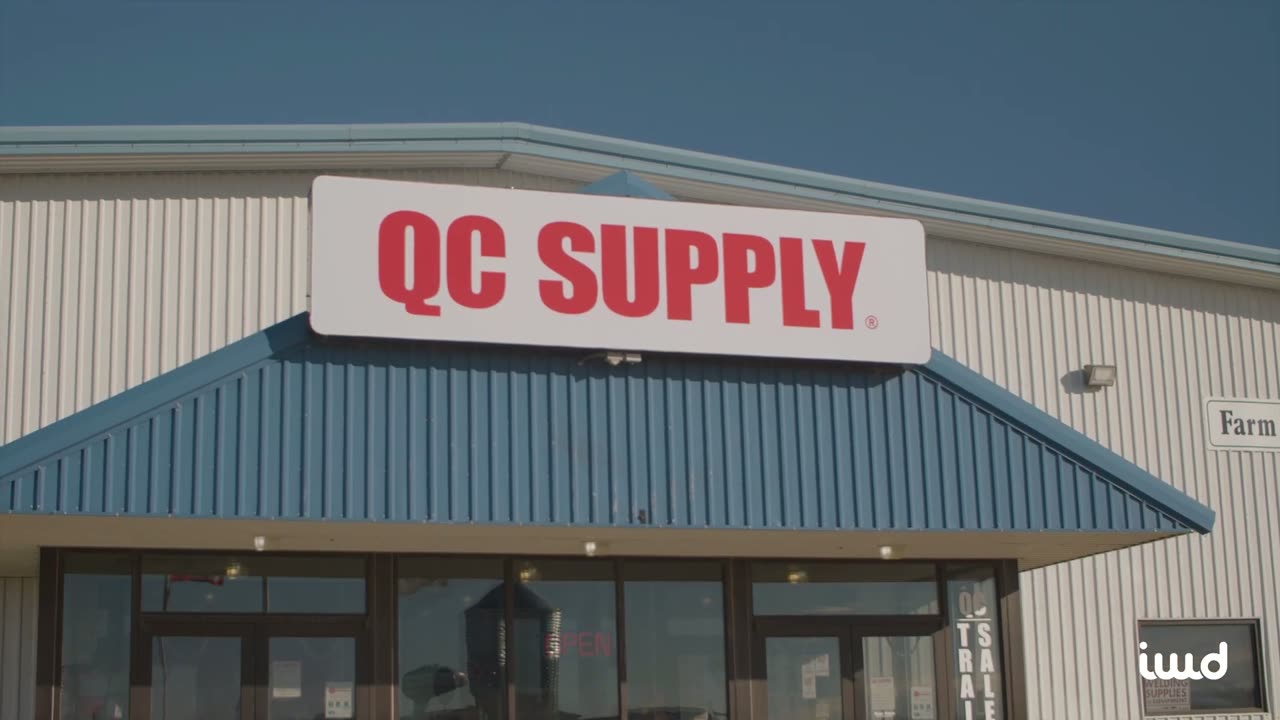
QC Supply
A headless Adobe Commerce B2B platform we built on Microsoft Dynamics NAV for a farm and ranch retailer with B2B Pro accounts.

Warner Press
A Magento store for a publisher, integrated with Sage ERP via Greytrix and PayFabric payments.
An Infor integration partner that stays after launch.
Same senior team from kickoff to launch and beyond. We do not outsource, we do not disappear after go-live, and we do not hand you off.
Across every phase. Discovery, build, launch, and growth, the same senior team stays with you.

Our job is to get you promoted.
You're going to love coming to work. Think of us as an extension of your team, here whenever you need us. Our mission is simple: your store wins, and so do you.
One team for the storefront and the Infor connection.
Most Infor integration problems sit between two vendors: the agency that built the store and the partner or IT team that runs Infor. IWD builds the storefront and the integration, and works alongside your Infor team, so one team is accountable for an order getting from cart to shipment.
A live SyteLine integration
DMC's Adobe Commerce B2B store runs on the bidirectional SyteLine sync we built, documented in a public case study.
SX.e experience as well
We connected a multi-branch distributor's Magento 2 B2B store to Infor SX.e, including daily customer-specific pricing for thousands of accounts.
Direct or middleware, chosen by fit
DMC's flows were too tied to SyteLine for a generic iPaaS, so we built a direct integration. Where middleware fits, as eBridge did for the SX.e order flow, we use it.
Honest scoping
If a connector or the middleware you already run covers you, we recommend it. Custom work is for the rules that need it.
An Infor integration mapped with your ERP team before anything is built.
Customer numbering, pricing rules, warehouses, and lead times differ in every Infor company. Agreeing on them first is what keeps the integration quiet after launch.
Assess
A 30-minute call on your Infor product and version, cloud or on-premise hosting, your storefront, and what has to sync. If a connector or your current middleware fits, we tell you.
Map
We document which system owns customers, items, prices, stock, and lead times, how orders and payments post, and what happens on errors, with your Infor partner or IT team.
Build and test
We build the storefront modules, API calls, or middleware flows, then run real sample orders for each customer type, payment method, warehouse, and lead-time rule.
Go live and support
We switch on live sync, watch the first weeks of orders, and support the integration through Infor updates, new warehouses, and catalog changes.
What teams ask before connecting their store to Infor.
The questions we hear most on the first call. If yours isn't here, just ask.
Can you integrate Infor SyteLine with Magento or Adobe Commerce?
Yes. DMC's Adobe Commerce B2B store runs a bidirectional Infor SyteLine integration we built on the IDO REST API, covering customers, addresses, payment terms, products, inventory, lead times, orders, and shipments. We connect SyteLine with Magento Open Source through the same API.
Is Infor SyteLine the same as CloudSuite Industrial?
Yes. Infor now sells SyteLine as Infor CloudSuite Industrial (CSI), and many teams still call it SyteLine. Infor SX.e is likewise offered in the cloud as Infor CloudSuite Distribution. The integration path depends on your version and on whether you run in Infor's cloud or on your own servers, so we confirm both on the first call.
Do you integrate Infor SX.e or CloudSuite Distribution?
Yes. We connected a multi-branch trade supply distributor's Magento 2 B2B store to Infor SX.e through Greywolf APIs, with customers created from approved registrations, products and inventory by warehouse, daily customer-specific pricing, orders through eBridge middleware, and ERP purchase history and requisition lists in the customer account.
Should we use middleware or a direct Infor integration?
It depends on how specific your flows are. DMC's original plan called for Celigo, an iPaaS, but its customer document profiles, account-number normalization, ship-date write-back, and ERP-driven card capture were too tightly tied to SyteLine for a generic middleware layer, so we built a direct integration. For the SX.e distributor, orders ran through eBridge middleware. We recommend whichever is simpler to run for your rules.
Can our store show the customer pricing we keep in Infor?
Yes. For the SX.e distributor, we imported customer-specific pricing for thousands of accounts every day into a custom pricing engine, and DMC's product pages show tier pricing from SyteLine. We decide with you whether prices sync on a schedule or are looked up live, based on how many accounts and prices you manage.
Can the card be charged when the order ships instead of at checkout?
Yes. On DMC's store the card is pre-authorized at checkout, and final capture fires from the ERP after shipment, so payment follows fulfillment instead of the cart.
Can Shopify or BigCommerce connect to Infor?
Yes. Both platforms have APIs that can carry Infor customers, pricing, stock, and orders, usually through a custom app or middleware. The Infor projects on this page run on Magento and Adobe Commerce, so we scope Shopify and BigCommerce work carefully against your Infor product and version.
Do you support the integration after launch?
Yes. Infor updates, new warehouses, price changes, and new customer types all touch the integration. We provide ongoing monitoring and support alongside the rest of your store.
Tell us which Infor product you run and what your team still keys in by hand.
Send us your storefront platform, your Infor product and version, and the work your team repeats every day. We will come back within one business day with an honest read on the right approach.