When someone buys a rescue harness, a climbing device, a rifle scope or a piece of safety equipment, a wrong choice is not a return. It can be a failed inspection, a rejected purchase order or a real safety problem. That makes technical and regulated gear some of the hardest products to sell online well. Buyers need exact specifications and certifications. Your dealers and distributors need to know you are not undercutting them. And some products can only ship to certain places, or to certain people.
This guide covers ecommerce for manufacturers of technical gear: how to present specs so buyers trust them, how to sell direct without damaging a dealer network, and how to handle shipping restrictions and verification in the checkout itself. It reflects the parts, equipment and B2B catalogs our B2B ecommerce development team builds on Magento, Adobe Commerce and Shopify Plus.
Make the specifications the product page
Technical buyers read the spec table before the marketing copy. Often they arrive with a requirement (a load rating, a diameter, a working temperature, a standard it has to meet) and leave as soon as they can't confirm it.
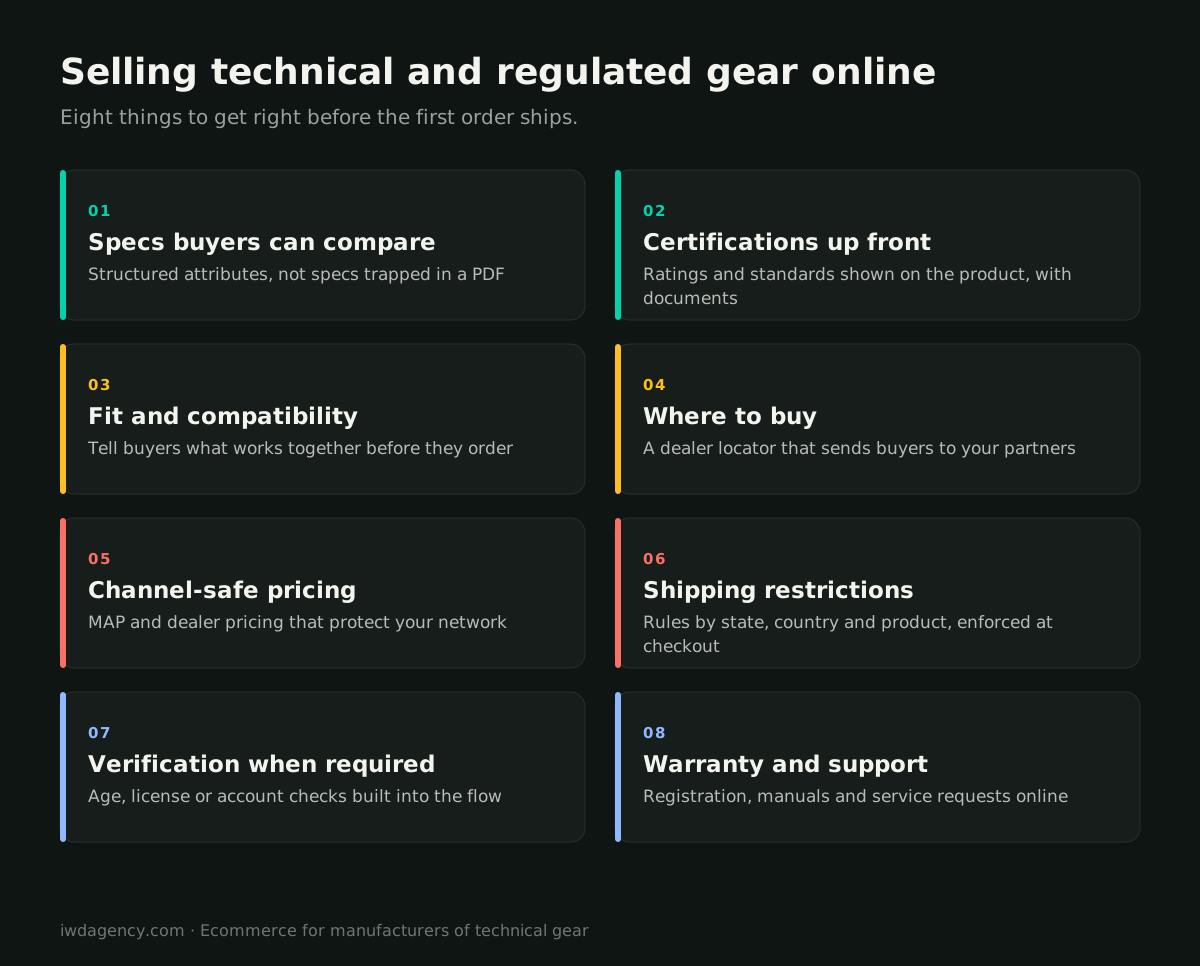
Structure every spec as data. Ratings, dimensions, weight, materials, compatibility and operating ranges should be structured attributes, not a paragraph or a PDF. Structured specs power filters ("show me devices rated for this rope diameter"), side-by-side comparison and accurate search, and they make your product data reusable for dealers, marketplaces and AI shopping assistants.
Show certifications on the product, with proof. If a product meets a recognized standard or carries a rating, show it near the top of the page and link to the certificate or declaration of conformity. Buyers purchasing for a team or an agency often have to attach that documentation to their request.
Tell buyers what works together. Compatibility is where technical buyers get stuck. Show which accessories, replacement parts and consumables fit each product, and which combinations are not approved. For a Fortune 500 equipment manufacturer, we built a parts finder that lets buyers shop by model and serial number, so the exact-fit part shows first across thousands of serial-driven SKUs.
Keep manuals and instructions a click away. User manuals, inspection guides, care instructions and training videos belong on the product page. They answer pre-sale questions and reduce support calls after the sale.
Sell direct without breaking your dealer network
Most technical gear brands sell through dealers, distributors and specialty retailers, and many also want a direct channel. The two can coexist if the website is designed around the channel rather than against it.
Decide what the website is for. Some brands sell everything direct. Others sell only accessories and parts direct and send core products to dealers. Others sell direct only where they have no dealer coverage. Pick a model deliberately and build the site to match.
Give buyers a good way to find a dealer. A "where to buy" or dealer locator that shows nearby partners, what they stock and how to contact them sends demand to your network instead of away from it. For professional buyers, show which dealers support agency or government purchasing.
Protect pricing. Enforce minimum advertised price (MAP) policies on your own site, and keep dealer and distributor pricing behind a login. Wholesale accounts can order at their own prices in a B2B area of the same store, which is often simpler than running a separate wholesale site.
Consider B2B2C flows. Some manufacturers take the order on their own site and route it to a local dealer for fulfillment, fitting or pickup, so the dealer earns the sale. It is more complex to build, but it lets you capture online demand without competing with partners.
Shipping restrictions and verification belong in checkout
Regulated products come with rules: some items can't ship to certain states or countries, some need the buyer's age or license verified, and some carry hazardous materials classifications (batteries and certain chemicals are common examples) that change how they can ship. Those rules are only reliable if the platform enforces them automatically.
- Product-level shipping rules: block restricted destinations by state, country or postal code at the cart, with a clear message explaining why, rather than cancelling the order after payment.
- Verification steps: where age, licensing or account approval is required, build the check into the account or checkout flow so it happens before the order is placed.
- Carrier and packaging rules: assign hazmat or oversized items to eligible carriers and service levels, and calculate the correct shipping cost up front.
- Export controls: if some products fall under export regulations, restrict international checkout for those items and route international inquiries to your team.
- An audit trail: keep a record of verifications and exceptions. If a regulator, a partner or an insurer asks how your rules are enforced, you can show them.
The specific rules depend on your products and markets, so work through them with your compliance team first. The ecommerce platform's job is to enforce the rules you set consistently on every order.
Common mistake
Handling restrictions manually: accepting every order, then having a person check and cancel the ones that shouldn't ship. It frustrates buyers, creates refunds and chargebacks, and eventually something slips through. Put the rules in the platform.
Warranty, registration and support after the sale
Technical gear has a long life after purchase. Product registration, warranty claims, inspection reminders, recalls and replacement parts are all chances to serve the owner and learn who they are, especially when the product was bought through a dealer. For the Fortune 500 equipment OEM above, warranties and a serialized catalog were part of more than 20 initiatives we delivered on its Magento parts commerce platform.
Put registration and warranty requests online, connect them to your product and customer records, and use them to build a direct relationship with end users that you can reach when there is a new product, an updated manual or a safety notice.
Choosing the right platform
Deep technical catalogs, structured attributes, dealer and wholesale pricing, and product-level shipping rules are where platform choice matters most. Magento and Adobe Commerce handle large attribute sets, B2B accounts and custom checkout rules natively and flexibly. Shopify Plus works well for simpler catalogs with fewer restrictions and a strong direct channel, with apps or custom logic for verification and shipping rules. Our manufacturing ecommerce work spans both, and our Magento B2B team builds the dealer and wholesale side. If your current platform can't enforce your rules, our ecommerce replatforming team can plan the move.
Selling technical or regulated products?
Book a free 30-minute assessment. We'll review your product data, dealer strategy and checkout rules, and tell you plainly where your site is losing sales or taking on risk. No pitch deck, no obligation.
Book a 30-minute assessmentMore guides for growing ecommerce teams
- Ecommerce migration checklist: your first year after a replatform
- B2B ordering portals: what contractors and retailers expect
- Ecommerce for lab and reagent suppliers, including punchout catalogs
- Running multiple brand stores on one platform
- CRO for considered, higher-priced purchases
- Is your ecommerce platform holding you back? A 10-minute self-check
Frequently asked questions
Can manufacturers sell direct online without hurting their dealers?
Yes, if the channel model is deliberate. Common approaches include selling only parts and accessories direct, sending core products to dealers through a dealer locator, enforcing MAP pricing, and routing online orders to local dealers for fulfillment. The key is to design the site around the dealer relationship rather than against it.
How should technical specifications be shown on a product page?
As structured attributes in a clear spec table near the top of the page, with certifications, compatibility and downloadable documents alongside. Structured specs power filters, comparisons and search, and they let buyers confirm a requirement quickly.
How do ecommerce sites handle shipping restrictions for regulated products?
The best approach is to enforce rules automatically at the cart and checkout: block restricted destinations by product, require verification where needed, assign eligible carriers for hazmat items, and explain clearly why an item can't ship to an address. Manual review after the order causes delays and mistakes.
What is B2B2C ecommerce for manufacturers?
B2B2C means the manufacturer sells or captures the order online while a dealer or retailer fulfills it, fits it or completes the sale. It lets manufacturers meet online demand while keeping their dealer network involved and paid.
Which platform is best for technical and industrial products?
For large, attribute-heavy catalogs with dealer pricing, B2B accounts and custom shipping rules, Magento and Adobe Commerce are strong fits. Simpler direct-to-consumer catalogs often do well on Shopify Plus. The right choice depends on catalog depth, integrations and how complex your rules are.